


/file/publisher-c1a3f893382d2b2f8a9aa22a654d9c97/2022/12/8fde8817a2e5e02d350fd76645a12789.jpg)

AG-PP separation: Govt tables constitutional amendments
PARLIAMENT | The government has tabled the Constitution (Amendment) (No. 2) Bill 2026 to formally separate the roles of the attorney-general (AG) and the public prosecutor, introducing major structural changes to the criminal justice system.
The bill, through amendments to six articles and the insertion of two new articles, provides for the creation of a new constitutional office of the public prosecutor, transferring the prosecutorial powers held by the AG to an independent officeholder.
The six Federal Constitution articles to be amended are...
PARLIAMENT | The government has tabled the Constitution (Amendment) (No. 2) Bill 2026 to formally separate the roles of the attorney-general (AG) and the public prosecutor, introducing major structural changes to the criminal justice system.
The bill, through amendments to six articles and the insertion of two new articles, provides for the creation of a new constitutional office of the public prosecutor, transferring the prosecutorial powers held by the AG to an independent officeholder.
The six Federal Constitution articles to be amended are as follows:
Article 42 – references to AG replaced with public prosecutor
Article 132 – recognition of AG and public prosecutor offices in the public service structure
Article 138 – changes to functions and composition of the Judicial and Legal Service Commission
Article 145 – restructuring and limitation of the AG’s role
Article 160 – updated definitions, including “public prosecutor”
The bill also included consequential amendments within those same Articles through multiple clauses.
The two new Articles the bill is seeking to insert in the Constitution are:
Article 145a – Establishment, appointment, tenure, and removal of the public prosecutor
Article 145b – Powers and duties of the public prosecutor
Through the proposed amendments, the AG will no longer oversee criminal prosecutions. Instead, the new public prosecutor will have exclusive authority to institute, conduct, or discontinue criminal proceedings, except in syariah, native, or court-martial cases.
Unlike the current structure, the AG’s role will be limited primarily to providing legal advice to the government on non-criminal matters.
Appointment and tenure
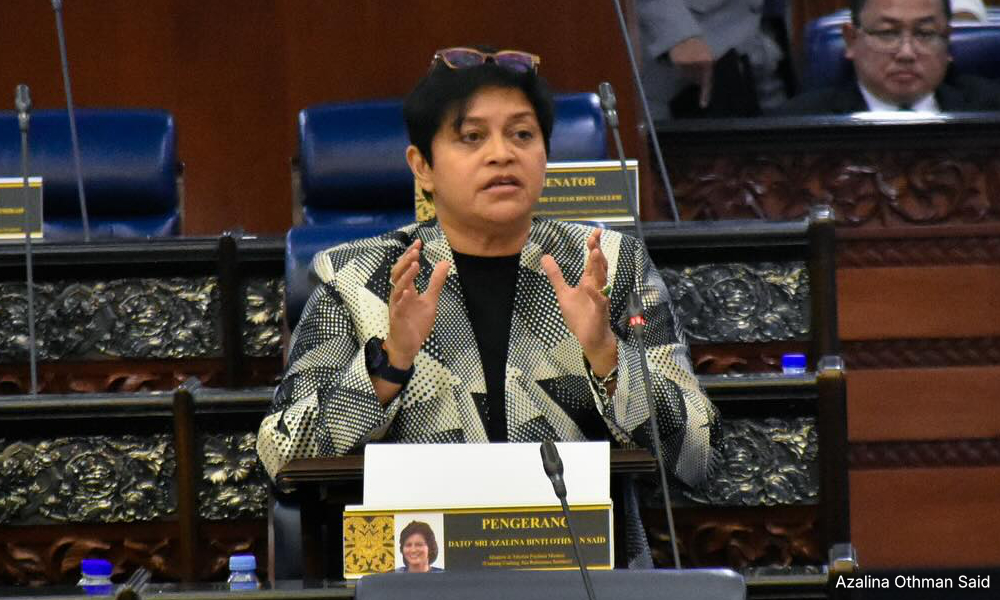
According to the bill, which was tabled by Minister in the Prime Minister’s Department (Law and Institutional Reform) Azalina Othman Said today, the public prosecutor will be appointed by the Yang di-Pertuan Agong, acting in his discretion, upon recommendation of the Judicial and Legal Service Commission and after consultation with the Conference of Rulers.
Candidates must be Malaysians with at least 10 years of litigation experience and cannot be an MP.
The public prosecutor will serve a fixed seven-year term, with removal only through a tribunal process similar to safeguards applied to senior judicial office holders.
The amendments also expand the powers and composition of the Judicial and Legal Service Commission, enabling it to recommend appointments of the public prosecutor and include additional senior judicial figures among its members.
The offices of the AG and public prosecutor will also be formally recognised as part of the judicial and legal service structure.
The AG will continue to hold office at the pleasure of the Agong but will no longer exercise prosecutorial authority. New provisions also address remuneration, tenure protections, and retirement arrangements.
Constitutional recognition of new office
The proposed new Articles - 145a and 145b - will establish the public prosecutor’s powers, duties, and removal procedures, while Article 160 is to be amended to formally define the position within the Constitution.
The amendments will come into force on dates to be appointed by the Agong through a gazette notification, allowing different provisions to take effect at different times.
On Feb 20, Azalina announced that the amendments will be tabled for second reading on March 2.
Separating the legal and prosecutorial functions of the AG has been one of Pakatan Harapan’s key promised areas of reforms, to reinforce institutional independence and promote greater transparency and fairness in the national legal system.
/file/publisher-c1a3f893382d2b2f8a9aa22a654d9c97/2022/12/8fde8817a2e5e02d350fd76645a12789.jpg)
/file/publisher-c1a3f893382d2b2f8a9aa22a654d9c97/2025/04/1f9da94078a3bb26e02a410e9d999a04.jpg)
/file/publisher-c1a3f893382d2b2f8a9aa22a654d9c97/2024/12/b3b3b01a4677b150c3434579229445f4.jpg)
/file/publisher-c1a3f893382d2b2f8a9aa22a654d9c97/2023/09/eb5d6572ede0675cfd1e3445cd2654a5.jpg)


Are you sure you want to delete this comment?
This action cannot be undone.